
The budgetary allocation for the sector is Rs 60,908.22 crore, with Rs 6,400 crore earmarked for the centre's flagship health insurance scheme Ayushman Bharat- Pradhan Mantri Jan Arogya Yojna (AB-PMJAY).

Given the gap between budgetary allocation and use, a parliamentary standing committee has asked the Ministry of Ayurveda, Yoga and Naturopathy, Unani, Siddha and Homeopathy (Ayush) to take steps to prevent underutilisation of funds under the National Ayush Mission (NAM) scheme. According to the data, the ministry was allocated Rs 1,200 crore for the mission in the Budgetary Estimate (BE) for FY24. The Revised Estimate (RE) for the year fell to Rs 815 crore, of which Rs 589 crore, or 74 per cent, has been spent till January.

Propelled by strong demand and lower costs, the country's largest airline, InterGlobe Aviation (IndiGo), reported solid operational performance in the 2024-25 (FY25) October-December quarter (Q3). While demand was driven by the festival season, year-end increase, and higher consumer spending, lower fuel and rental costs helped deliver a beat at the operating profit level.

The combined fertiliser, food and petroleum subsidy budgeted estimate for FY19 is Rs 2.64 trillion, while the revised estimate is Rs 2.66 trillion. If the carrying forward to FY20 does not happen, the revised estimates for the major subsidies could actually cross Rs 3 trillion for the first time ever.

The CBI had received Rs 802.19 crore initially in the last budget and it was increased to Rs 835.75 crore in the revised estimates for 2020-21.

Surplus in March, the last month of a financial year, has helped the government reduce fiscal deficit in the last few years.

'Spend, but create assets, spend but make sure that people benefit from it.' 'This has been a beautiful guiding principle. And I think as a finance minister I owe so much to the prime minister for keeping this path clear before us.'

The Centre has allocated Rs 73,000 crore to the rural employment guarantee programme Mahatma Gandhi National Rural Employment Guarantee Act for the next fiscal 2021-22, substantially lower than the actual expenditure of Rs 1.11 lakh crore in the current fiscal which included an additional Rs 40,000 crore for the scheme given by the government in the wake of the pandemic's impact on the economy.

The market capitalisation (mcap) cutoff to qualify for mutual funds' (MFs') largecap universe is likely to go up for the fifth consecutive time to touch the Rs 1 trillion mark for the first time. A fresh list of largecap, midcap, and smallcap stocks is set to be released by the Association of Mutual Funds in India (Amfi) in the first week of January.

After climbing to a record high of Rs 523 on September 30, shares of commodity major Vedanta have come off over 15 per cent amid a fall in the overall markets. The Anil Agarwal-led firm's latest slump comes after its stock price doubled over the past one year. Is it a blip or a trend reversal?

The Trump trade shock is a chance to push long-overdue reforms, rather than tinker with tariffs to appease the US, suggests M Govinda Rao.

The numbers become all the more important because actual tax collections fell short by Rs 1.91 trillion compared to what was projected in 2018-19. Besides, the Budget for FY20 did not give actual figures for 2018-19, but the revised numbers given in the interim Budget.

Shares of Tata Consultancy Services (TCS), the country's largest IT services provider, continue to remain under pressure, hitting a new eight-month low of Rs 3,624.90 intraday on Tuesday before closing at Rs 3,631, down 1.19 per cent. In the past two trading sessions, the stock price has declined 4 per cent on fears of a slowing US economy.

The government also announced that healthcare cover under the Ayushman Bharat insurance scheme will be extended to all ASHA and anganwadi workers and helpers.

Gross direct tax collection in 2022-23 rose by around 20 per cent to Rs 19.68 lakh crore, exceeding the government's revised collection target. Buoyed by personal income tax collection, the gross collection has exceeded the revised estimates (RE), set on February 1, by Rs 2.41 lakh crore or by 16.97 per cent. After adjusting for refunds, the net income tax paid by individuals and corporate, showed an increase of 18 per cent to Rs 16.61 lakh crore during the fiscal, which ended March 31, 2023.
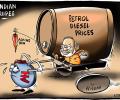
Price of international crude oil - the raw material for making petrol and diesel - dropped to a three-year low before marginally recovering but a revision in domestic petrol and diesel rates is likely only if lower rates are sustained, industry sources and officials said. Global oil benchmark Brent crude futures fell below $70 per barrel on Tuesday - the first time since December 2021 - but gained thereafter after Hurricane Francine hit crude supply in the Gulf of Mexico. Brent rose above $71 a barrel on Thursday while West Texas Intermediate advanced to trade near $68.

Domestic rating agency Icra on Monday upped its banking sector outlook to 'positive' on healthy asset growth, improving asset quality and stronger capital buffers. The agency expects asset quality to improve to a decadal best of 4 per cent from a gross non-performing assets (NPAs) perspective by the end of FY24. The banking system's credit growth will slow down to 11-11.6 per cent in FY24, after a very healthy growth of 15.2-16.1 per cent expected in FY23, the rating agency said.

Food delivery and quick commerce (qcom) service application (app), Zomato, now commands a market capitalisation (mcap) higher than automobile giants Tata Motors and Bajaj Auto. Zomato, whose shares closed 1.18 per cent lower on Thursday at Rs 288.45 per share, has an mcap of Rs 2.78 trillion, according to BSE data. By comparison, Tata Motors' mcap stood at Rs 2.74 trillion, while Bajaj Auto's was Rs 2.5 trillion on the BSE.

Although UltraTech Cement's results for the December quarter of the current financial year (Q3FY25) were not an improvement compared to Q3FY24, the company managed to surpass Street expectations. The company's profit attributable to the owners of the parent dropped 17.4 per cent year-on-year (Y-o-Y) to Rs 1,469.5 crore in Q3FY25 as against Rs 1,777 crore in Q3FY24.

As political winds stir in these states, it's prudent to assess their economic landscapes.

At the customary post-Budget media interactions, Finance Minister Nirmala Sitharaman and her topmost bureaucrats touched upon a number of issues. The minister said the government taxing income from digital virtual assets did not give them legitimacy and that issue was being dealt separately in the planned cryptocurrency Bill. She also expressed confidence that the Budget targets were achievable.

Fiscal deficit for 2020-21 was at 9.3 per cent of the gross domestic product (GDP), lower than 9.5 per cent estimated by the finance ministry in the revised Budget estimates, according to the CGA data. Unveiling the revenue-expenditure data of the Union government for 2020-21, the Controller General of Accounts (CGA) on Monday said that the revenue deficit at the end of the fiscal was 7.42 per cent.

The defence budget was increased to Rs 5.94 lakh crore for 2023-24, up from last year's allocation of Rs 5.25 lakh crore.

By acting now, you can step into 2025 with your finances in order and without unnecessary penalties.

Maharashtra is the BRS' first target.
The Centre has allocated Rs 73,000 crore for the rural jobs guarantee programme for 2022-23.

The Union government's revenue from securities transaction tax (STT) is on track to exceed its Budget projection for the current fiscal year, with the mop-up already surpassing 50 per cent of the annual estimate. Provisional figures reveal that the Centre has collected approximately Rs 14,000 crore in the first half of this fiscal year up to September, according to a government official. This amount exceeds half of the full-year target of Rs 27,625 crore set for FY24.

HDFC Life Insurance Company (HDFC Life) delivered a strong performance in the December quarter of the current financial year (Q3FY25), exceeding market expectations with robust earnings growth. The company reported a 13.7 per cent year-on-year (Y-o-Y) increase in net profit to Rs 414.9 crore in the quarter. The value of new business (VNB) rose 8.6 per cent Y-o-Y to Rs 930 crore, compared to Rs 856 crore in the corresponding quarter of the previous year.

Union Finance Minister Nirmala Sitharaman, along with her team of bureaucrats, delved into the fine print of the 2024-25 Budget documents in a press conference, detailing the government's road map on bringing down the debt-to-GDP ratio and bold tax measures.

The government's subsidies on food, fertilisers, LPG and kerosene are pegged at Rs 5.96 lakh crore in the current fiscal, over 2.5-fold jump from the initial budget estimates as the Centre distributed additional foodgrains free of cost to help poor mitigate the impact of COVID-19 pandemic. In February 2020 Budget, presented in the pre-COVID scare, the government had estimated the subsidy bill at Rs 227,794 crore. However, all the budget estimates, have undergone major revisions as the country imposed strict lockdown to check the spread of COVID-19.

The finance ministry will kick-start the exercise to prepare the Union Budget for financial year 2022-23 (FY23) from October 12, according to an official notification released on Monday. "The pre-Budget meetings as well as the meetings to discuss the revised estimates will start from October 12 and will continue till the second week of November," according to the Budget circular of the Department of Economic Affairs' Budget Division. The Union Budget is expected to be announced on February 1, as has been the practice of the past few years.

While indirect taxes collections have exceeded revised estimates (RE) by Rs 9,885 crore, direct tax realisations fell short by Rs 4,000 crore over the RE.

There hasn't been any dramatic moment in the first act (the Budget) but nobody would complain. It's par for the course as long as the figures don't change in the main Budget, which will be presented after general elections.

Amid FY23 Union Budget's focus on investments, leading domestic credit rating agency Crisil on Wednesday said that the capital expenditure is "not as high as it sounds". It, however, was quick to add that considering that governments usually tend to cut capex during a crisis, the government has maintained its focus on growth-spurring initiatives amid the pandemic. The research wing of the agency said, if one excludes the Rs 1 lakh crore of loans to states for capex included in the headline figure of Rs 7.50 lakh crore or 2.91 per cent, the actual spend in FY23, will go down to 2.58 per cent of GDP, which is barely at par with the revised estimate of FY22.

According to the third batch of supplementary demands for grants tabled in the Lok Sabha, approval is being sought for gross additional expenditure of over Rs 1.58 lakh crore.
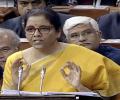
The revised estimated expenditure for FY20 has been pegged at Rs 26.99 lakh crore and receipts at Rs 19.32 lakh crore, she said.

State-owned oil firms such as ONGC and IOC will invest over Rs 1.11 lakh crore in the next fiscal year starting April as they supplement the government's massive spending programme to spur economic growth. Oil and Natural Gas Corporation (ONGC), Indian Oil Corporation (IOC), GAIL (India) Ltd, Bharat Petroleum Corporation Ltd (BPCL), Hindustan Petroleum Corporation Ltd (HPCL) and Oil India Ltd (OIL) will together make a 7.4 per cent higher capital expenditure in the 2022-23 fiscal (FY23). The capex spending of Rs 1.11 lakh crore in 2022-23 compares with a revised estimate of Rs 1.04 lakh crore for the current fiscal year that ends in March, according to Union budget documents.

Fitch Ratings has revised India's GDP growth estimate to 12.8 per cent for the fiscal year beginning April 1 from its previous estimate of 11 per cent, saying its recovery from the depths of the lockdown-induced recession has been swifter than expected. In its latest Global Economic Outlook (GEO), Fitch said revision is on the back of "a stronger carryover effect, a looser fiscal stance and better virus containment." "India's second half of 2020 rebound also took GDP back above its pre-pandemic level and we have revised up our 2021-2022 forecast to 12.8 per cent from 11.0 per cent," it said. "Nevertheless, we expect the level of Indian GDP to remain well below our pre-pandemic forecast trajectory."

All eyes will be on whether Sitharaman provides the much-expected tax relief for the middle class, leaving more money in their hands, as there is tax buoyancy

'The nominal GDP growth assumption for FY25 may be revised upwards on higher growth expectations.'
